



What Do LOTO Color Codes Mean?
By Grainger Editorial Staff 2/3/23
Understanding lockout/tagout color codes is key to preventing accidents. Find out how OSHA guidance and facility-specific systems apply color coding to locks, tags and energy control points to reduce risk, improve clarity and protect workers across industrial environments.
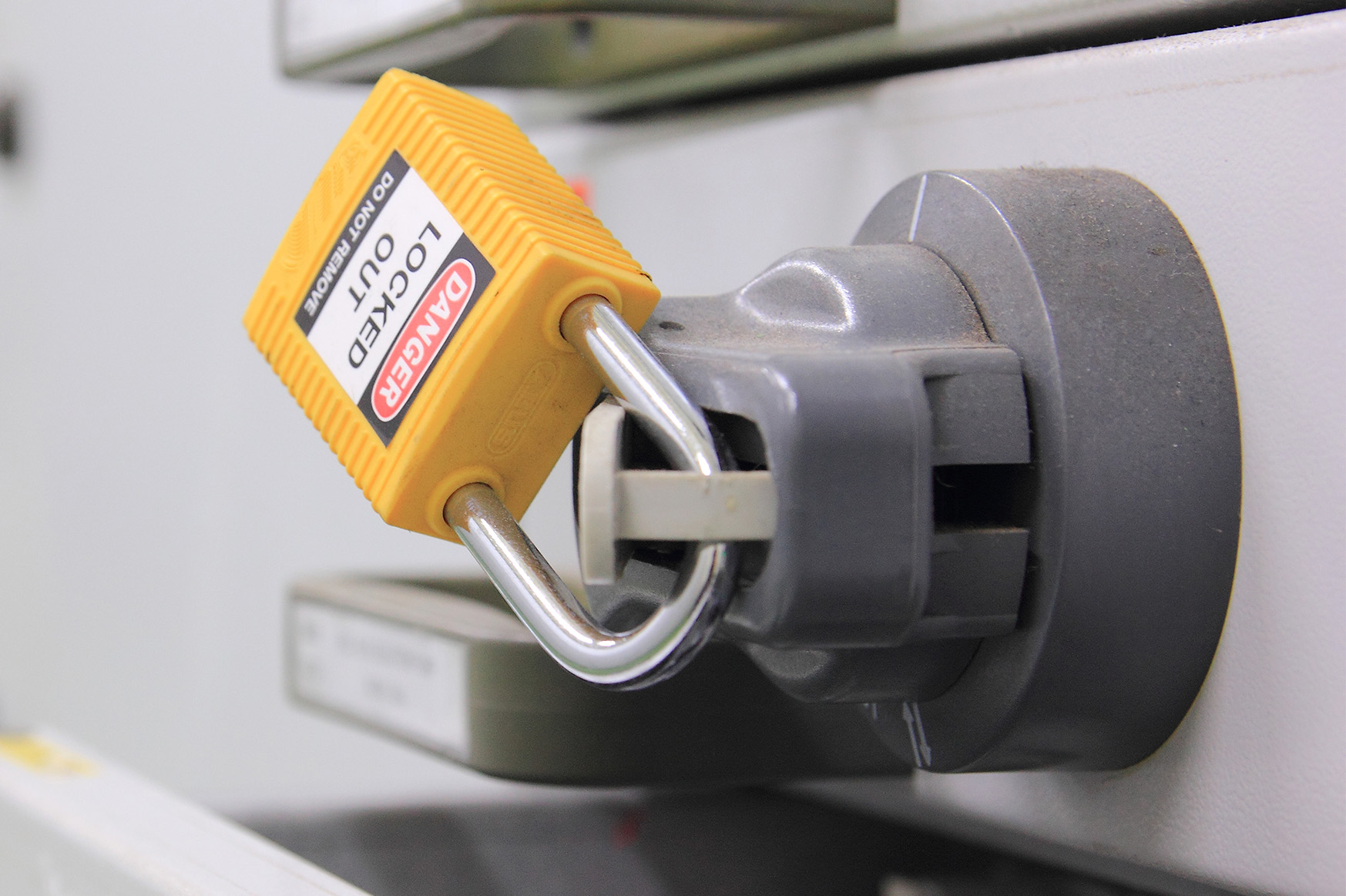
When people are servicing or performing maintenance on hazardous equipment, lockout/tagout (LOTO) devices are a critical OSHA-mandated safety measure. One or more LOTO devices attached to the equipment will show that it has been de-energized according to a standard procedure, making it safe to work on or around. They'll also prevent anyone from re-energizing that equipment until the employees who hold the keys finish their work and remove the lockout devices.
LOTO devices are immediately visible because of their brightly colored padlocks and tags. These might be red or orange—and in some facilities you may even see blue, green or other colors. The fact that they're so noticeable is a sign that they're working as intended. Their bright colors serve as a visual cue that something important is going on. But what exactly do the colors mean?
OSHA doesn't mandate specific colors for LOTO equipment. But the agency does recommend a color-coding system for accident-prevention tags that will meet the requirements of its standard on tags and signs. This system uses four colors:
- Red to indicate danger.
- Yellow to indicate caution.
- Orange to indicate warning.
- Fluorescent orange or orange-red to indicate a biological hazard.
For this reason, red is by far the most common color for LOTO devices and should include the word “DANGER” with red lettering or outline. Organizations are also free to develop their own unique color-coding systems, and many do just that.
For example, a facility might use a green lock when contractors lock out equipment, while a blue lock might indicate that the lockout is intended to protect the equipment itself. But with an overly complicated LOTO system, you risk dangerous misunderstandings and miscommunications.
And while OSHA doesn't mandate any specific color-coding system for LOTO devices, the agency does have other requirements for them. OSHA standards state that they must be:
- Durable—manufactured with materials that withstand the usage environment.
- Substantial—impossible to remove without considerable force.
- Standardized—clearly differentiated from other devices by color, shape or size.
- Identifiable—indicating the authorized employee that applied the device.
- Exclusive for safety—not to be used for purposes other than controlling energy.
The National Fire Protection Association (NFPA) also publishes requirements for LOTO devices in NFPA 70E: Standard for Electrical Safety in the Workplace. These guidelines are similar to OSHA's, but they offer more detail. NFPA 70E Article 120 requirements include:
- Lockout devices must be lockable, either with a key or combination.
- Lockout devices must include a way to identify the worker who installed the device.
- Lockout devices must be suitable for the environment they're being used in.
- The key or combination for the lockout device must be kept by the person who locked it or the person in charge, as provided in the written lockout procedure.

PPE in the Workplace
Gender-Specific PPE: Finding PPE Fit for Women
Learn why properly fitting PPE for women helps improve safety, comfort and compliance and how employers can support access to gear that fits.


![]() Our Latest KnowHow
Our Latest KnowHow

The Complete Tool Storage and Organization Guide
Storing tools the right way makes life easier. Tool storage cabinets, tool chests and lockers are just the beginning to storage and organization.




The information contained in this article is intended for general information purposes only and is based on information available as of the initial date of publication. No representation is made that the information or references are complete or remain current. This article is not a substitute for review of current applicable government regulations, industry standards, or other standards specific to your business and/or activities and should not be construed as legal advice or opinion. Readers with specific questions should refer to the applicable standards or consult with an attorney.


CONNECT WITH US




SIGN UP FOR EMAIL
Get more great content in your inbox.