




Earplugs vs. Earmuffs: Choosing the Right Hearing Protection for Your Job
By Grainger Editorial Staff 6/7/22
Learn about types of ear protection, earplug safety and the OSHA decibel limits for noise exposure. Explore the difference between earmuffs and earplugs, their NRR ratings and dual protection strategies for extreme noise levels.
Exposure to a loud working environment can cause permanent hearing loss and lifelong ringing in the ears, so it’s important to limit exposure to dangerous noise. The regulations regarding noise exposure are clear—if the workplace is noisier than 85 decibels over an eight-hour, time-weighted average, hearing protection must be provided. However, the method of protecting workers from harmful noise is largely left up to the business.
Administrative or engineering controls are the preferred first steps for hearing protection, before using PPE. Consider isolating loud equipment in an acoustically insulated room, or substituting noise-reduced power tools or machinery in place of traditional versions.
Earplugs vs. Earmuffs
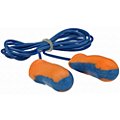
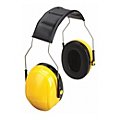
If engineering controls are not adequate, PPE is the next option. The two types of hearing PPE are earplugs and earmuffs. Every piece of hearing PPE is given a noise reduction rating (NRR) that shows how much noise it will block if worn correctly. OSHA provides four methods to determine what NRR will be necessary to work safely in your workplace.
In extremely loud environments, you may need both earplugs and earmuffs. NIOSH recommends using double hearing protection by wearing earmuffs over earplugs when workers are exposed to noise levels at or above 100 decibels or to sudden, high-impact sounds.
For many workplaces, though, the level of protection offered by either earmuffs or earplugs will adequately protect workers’ hearing. Which one is right for you? Consider the following when choosing which will work best for your jobsite:
Earmuffs
- Easy to wear: Earmuffs only take a second to slip on, and their ease of use reduces the barrier to compliance. Workers won’t be tempted to endure intermittent loud noises because they don’t want to stop and put in earplugs.
- Reusable: With proper care, a pair of earmuffs will last a long time. Replacement pad kits can provide a fresh seal when the old pads get cracked and dirty.
- Visibly compliant: A supervisor can make a quick visual inspection and be confident that everyone on the jobsite has their hearing protection on.
- Foolproof fit: Unlike earplugs, it’s difficult to apply earmuffs incorrectly. Workers are at less risk of injuring themselves by using them incorrectly.
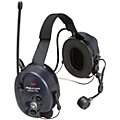
- High-tech options: Some earmuffs offer active noise suppression technology that muffles loud noises while transmitting quieter sounds, allowing workers to speak to one another. Other models have integrated speakers and microphones, and can double as two-way headsets linked to a jobsite communication network.
- Comfort on hot days: Earmuffs can trap heat, causing perspiration and discomfort in warm environments.
- Bulk: If you’re working in tight spaces, there is nothing more infuriating than snagging your earmuffs on a doorframe or having them ripped off your head by a low-hanging branch.
- Cost: At $20 to $40 a pair, you’ll want to keep track of your earmuff inventory. And it’s less likely that there will be an extra pair hanging around if someone shows up unprepared.
Earplugs
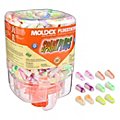
- Easy access: A wall-mounted earplug dispenser can hold 500 pairs of plugs, costing less than a quarter apiece. Workers don’t need to keep track of their earplugs and it’s easy to carry an extra pair in your pocket just in case.
- Higher NRR: Worn correctly, many roll-up earplugs offer an NRR 30-33, whereas most earmuffs offer protection levels in the 20s.
- Cool and comfortable: Earplugs don’t get clammy on hot days, and they don’t clamp down on your head like earmuffs. They also won’t get snagged when you’re working in tight spaces.
- Installation challenges: You can’t just mash roll-down style earplugs into your ears. Inserting earplugs correctly requires both hands—you have to roll the foam plug into a tube and pull your earlobe back to straighten your ear canal. It takes some time, and if your hands are dirty, putting in earplugs can get grime on your face and in your ears. But if you don’t put them in correctly, earplugs won’t work very well. “Push-in” style plugs are easier to fit, since they can be mashed into the ear, and pod-shaped plugs can be inserted without touching the plug if your hands are dirty. However, push-in plugs don’t offer as much protection as the more common roll-down style plugs.
- Easy to miss: It can be hard to tell at a glance whether a worker is wearing earplugs correctly. This means workers will have to take more personal responsibility for their hearing safety. One potential solution is corded earplugs; the cords are easier to spot.
- One size may not fit all: Some workers cannot tolerate earplugs for long. People with narrow or curved ear canals may find the pressure from plugs painful, and they may require a smaller or specially shaped plug to be comfortable. There are a range of earplug shapes—bell, cone, cylinder and flange, among others—to help users find the best fit.
Of course, hearing protection doesn’t have to be either-or. It may be best to give workers a choice, letting them choose the most comfortable and convenient form of protection for themselves.

PPE in the Workplace
Gender-Specific PPE: Finding PPE Fit for Women
Learn why properly fitting PPE for women helps improve safety, comfort and compliance and how employers can support access to gear that fits.


![]() Our Latest KnowHow
Our Latest KnowHow
The Complete Tool Storage and Organization Guide
Storing tools the right way makes life easier. Tool storage cabinets, tool chests and lockers are just the beginning to storage and organization.


The information contained in this article is intended for general information purposes only and is based on information available as of the initial date of publication. No representation is made that the information or references are complete or remain current. This article is not a substitute for review of current applicable government regulations, industry standards, or other standards specific to your business and/or activities and should not be construed as legal advice or opinion. Readers with specific questions should refer to the applicable standards or consult with an attorney.


CONNECT WITH US




SIGN UP FOR EMAIL
Get more great content in your inbox.